

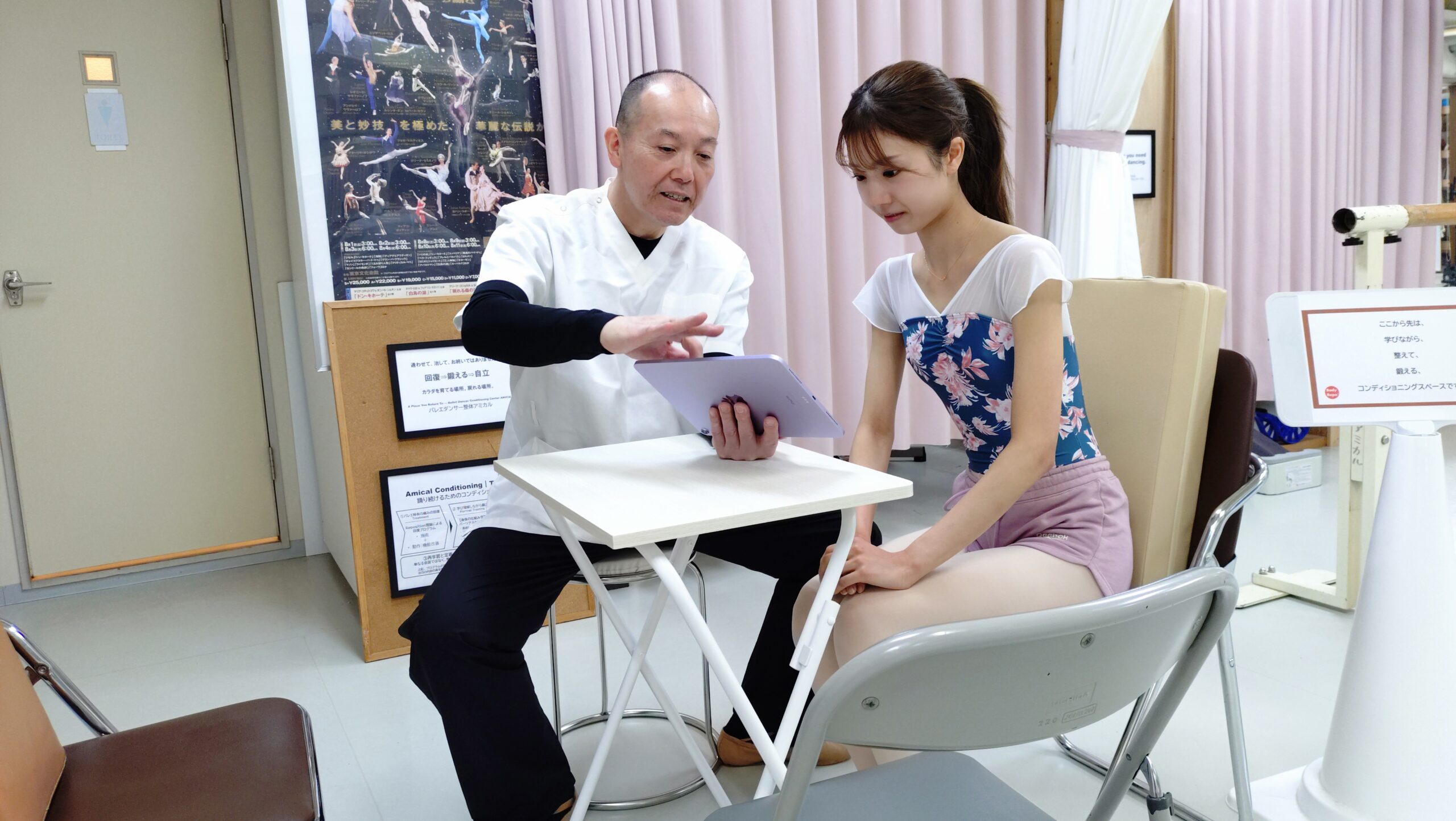
BFMT by BODYREPO
Overview
The Ballet Functional Moving Test (BFMT) is an assessment framework developed to understand how ballet dancers move, rather than how well they perform.
It is designed to identify the functional conditions that support or limit ballet movement, focusing on alignment, load management, and coordination during motion.
This framework is used as an internal assessment tool to guide conditioning and movement re-learning.
Purpose of the BFMT
The BFMT does not aim to judge performance quality, flexibility, or technical achievement.
Instead, it is used to:
- Clarify the physical conditions underlying ballet movement
- Identify priority areas for safe and sustainable practice
- Prevent overload caused by inappropriate or misaligned forces
- Support learning-based conditioning strategies
The goal is understanding before correction.
What the BFMT Assesses
The BFMT evaluates movement through the following perspectives:
- Alignment integrity under changing conditions
- Load distribution through the lower extremities and trunk
- Inter-segment coordination during functional ballet-related tasks
- Movement organization, not isolated range of motion
- Reproducibility of movement without excessive compensation
Movement is observed as a process, not a static position.
What the BFMT Does Not Assess
The BFMT intentionally does not assess:
- Maximum flexibility
- Muscle strength values
- Aesthetic appearance
- Technical correctness judged by form alone
- Performance ranking or scoring
This assessment does not compare dancers to one another.
Structure of the BFMT
The BFMT consists of two complementary layers:
1. Performance-Based Observation
Fundamental ballet movements (such as développé and plié variations) are observed to understand how the dancer organizes their body in real movement contexts.
2. Functional Component Tests
Specific tasks are used to examine how alignment, balance, trunk control, hip function, and load adaptation contribute to the observed movement patterns.
These components help explain why certain compensations appear.
Deep Plié as an Integrated Assessment
Within the BFMT, deep plié variations are used to assess whether correct alignment can be maintained as stance width and lower-limb conditions change.
The ability to preserve alignment under varying demands reflects the dancer’s capacity to manage external forces safely.
Conceptual Framework
The BFMT is grounded in the idea that movement limitations often arise not from stiffness or weakness alone, but from misaligned external forces and disrupted inter-tissue coordination.
By identifying these conditions, the assessment supports:
- Repositioning strategies
- Movement re-learning
- Sustainable conditioning rather than short-term correction
Positioning of the BFMT
The BFMT is not a diagnostic tool, nor is it a performance test.
It is a learning-oriented assessment framework used to organize information, set priorities, and guide appropriate conditioning decisions.
Closing Statement
The Ballet Functional Moving Test exists to answer a simple but essential question:
“Under what conditions does this dancer move?”
Understanding those conditions is the foundation for safe, efficient, and sustainable ballet practice.
BFMT by BODYREPO
An internal framework for understanding functional movement conditions in ballet dancers.
Below is the English version for web publication and direct copy-and-paste use, structured to mirror the original Japanese evaluation sheet precisely.
Tone, intent, and internal philosophy (learning-based, non-judgmental evaluation) are preserved.
Ballet Functional Moving Test (BFMT)
Ⅱ. Ballet Functional Component Tests (Evaluation Sheet)
BFMT by BODYREPO
Date: ____ / ____ / ____
Name: ________________________
Class / Level: ________________________
Evaluator: Kiyoshi Tagami
Ballet Dancer Conditioning & Osteopathy AMICAL (BODYREPO)
Important Note
This evaluation is not intended to judge ability as “can” or “cannot.”
Its purpose is to organize the physical conditions that support movement and to help the dancer learn how to restore and optimize those conditions.
Common Evaluation Criteria
✓ = Achieved
△ = Achieved with compensation
✕ = Not achieved
Range of motion size is not evaluated.
Evaluation focuses on the presence of compensations and alignment conditions.
① Long Sitting Upright Alignment Test
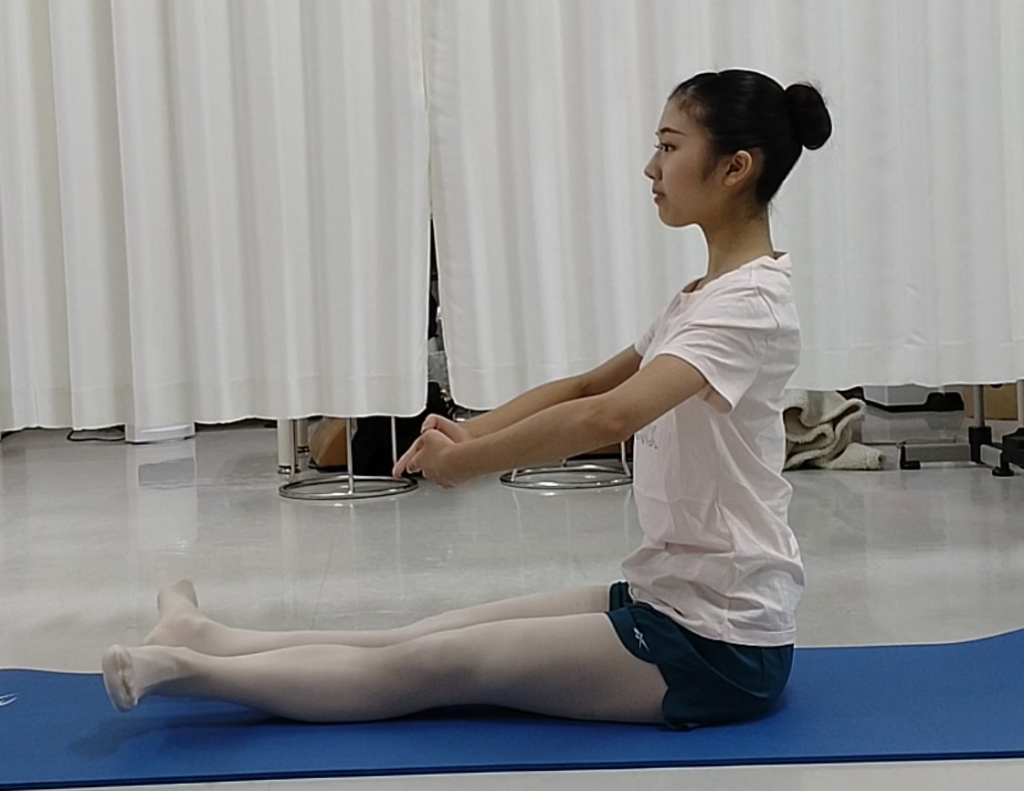
+ Leg Lift in Extension & External Rotation
Purpose
- Pelvic and spinal basic alignment
- Hip joint mobility
- Conditions required to hold the leg in external rotation
Checkpoints
- Able to maintain an upright pelvis independently
□ ✓ □ △ □ ✕ - No posterior pelvic tilt or spinal flexion compensation
□ ✓ □ △ □ ✕ - Able to externally rotate and lift the leg while maintaining pelvic alignment
□ ✓ □ △ □ ✕
Observation (keywords):
② Standing Thigh Lift Test (In Passé)
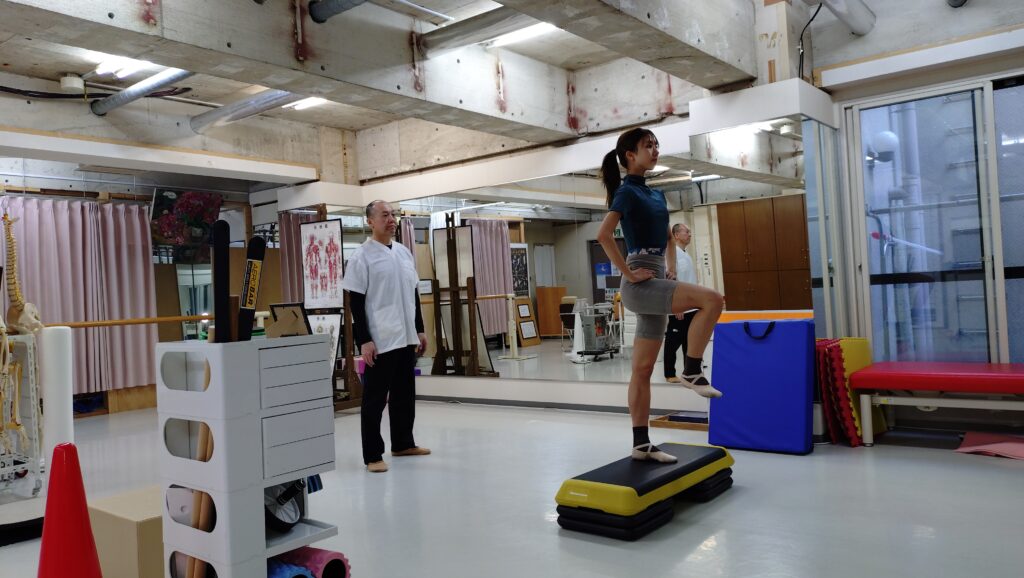
Purpose
- Function of hip flexor muscle group
- Pelvic stability
- Presence of compensatory movement
Checkpoints
- Femur lifts using the hip joint as the axis
□ ✓ □ △ □ ✕ - No compensation via pelvic tilt or elevation
□ ✓ □ △ □ ✕ - Not achieved by excessive trunk fixation or lumbar extension
□ ✓ □ △ □ ✕
Observation (keywords):
③ Standing Thigh Lift Test (À la Seconde)
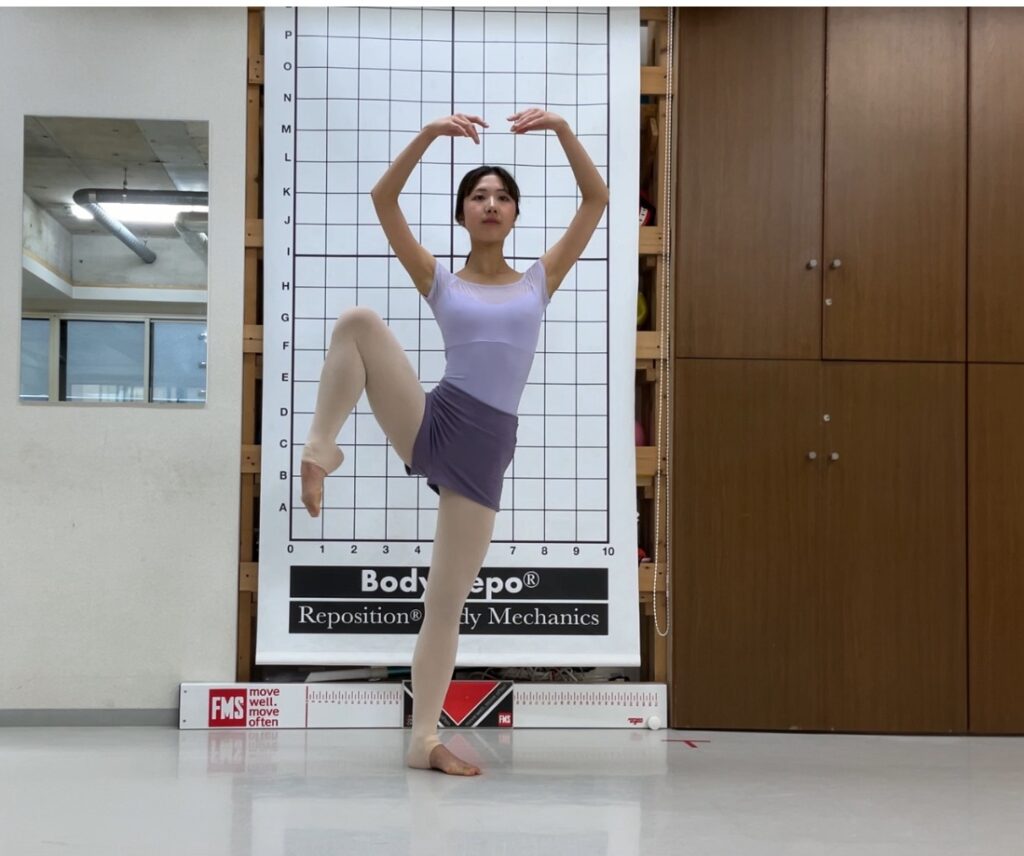
Purpose
- Mobility and control of pelvic elevation
- Function of spinal lateral flexion
- Coordination in lateral movement
Checkpoints
- Spinal lateral flexion and pelvic side-shift/elevation are coordinated
□ ✓ □ △ □ ✕ - Not achieved only by hip abduction or lumbar compensation
□ ✓ □ △ □ ✕ - Upper and lower body movements are not disconnected
□ ✓ □ △ □ ✕
Observation (keywords):
④ Airplane Balance Test
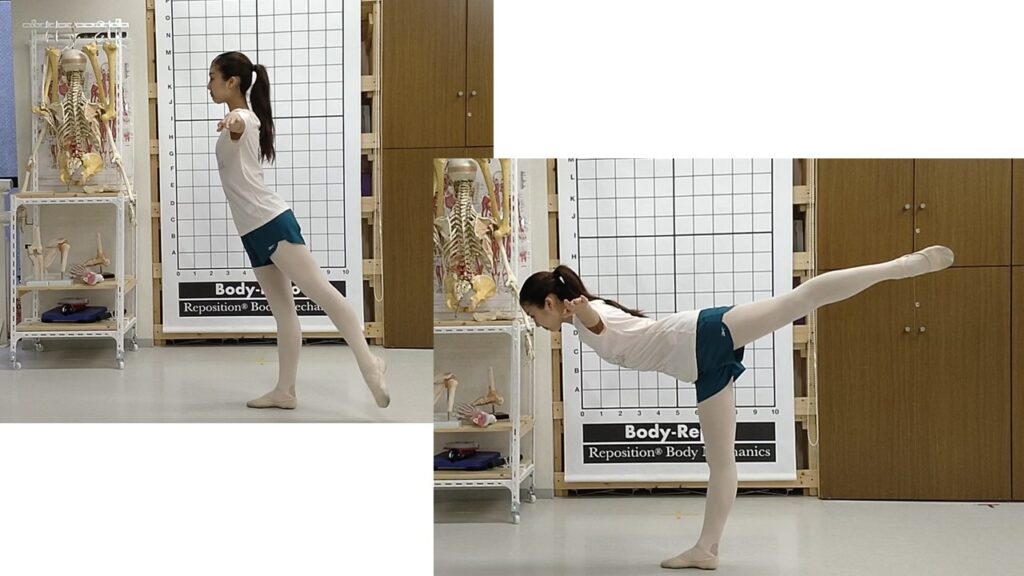
Purpose
- Single-leg balance ability
- Trunk and posterior chain support
- Hip-driven movement control
Checkpoints
- Able to move through the hip while maintaining balance
□ ✓ □ △ □ ✕ - Stability is not created through knee, foot, or lumbar compensation
□ ✓ □ △ □ ✕ - Able to support without excessive trunk rigidity
□ ✓ □ △ □ ✕
Observation (keywords):
⑤ Swan Keep Test
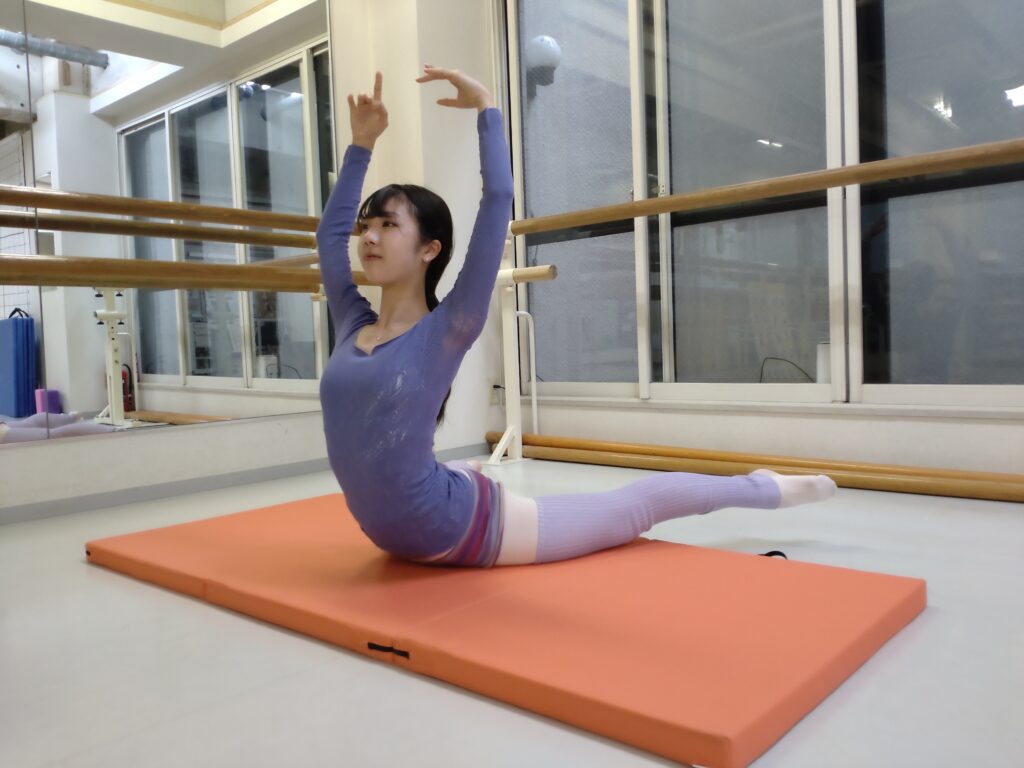
Purpose
- Segmental spinal control
- Coordination between pelvis and trunk
- Ability to maintain the axis during anterior-posterior movement
Checkpoints
- Axis is maintained during forward and backward motion
□ ✓ □ △ □ ✕ - No compensation through excessive lumbar extension or flexion
□ ✓ □ △ □ ✕ - Trunk adjusts while pelvic position is maintained
□ ✓ □ △ □ ✕
Observation (keywords):
⑥ Deep Plié Alignment Test
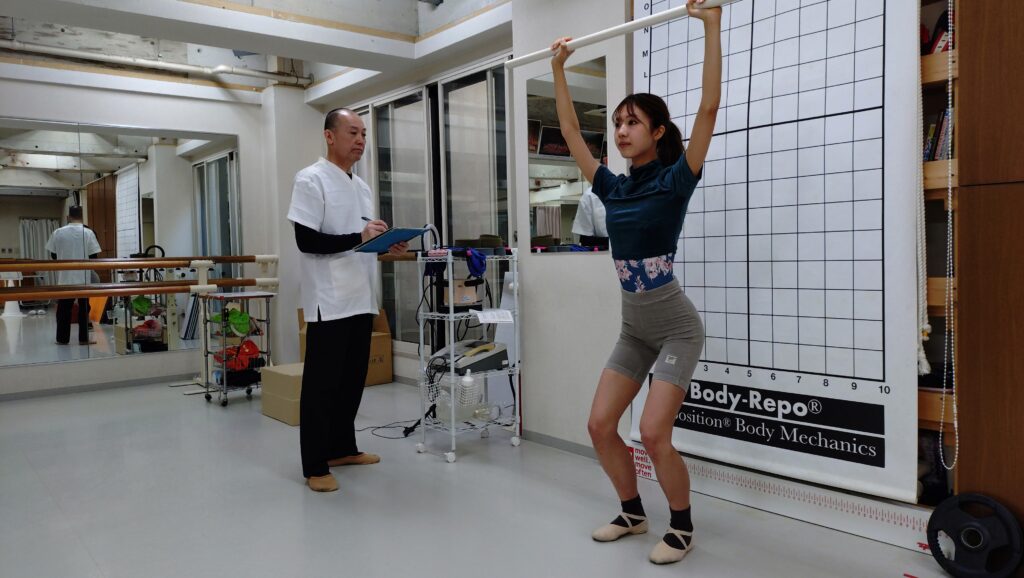
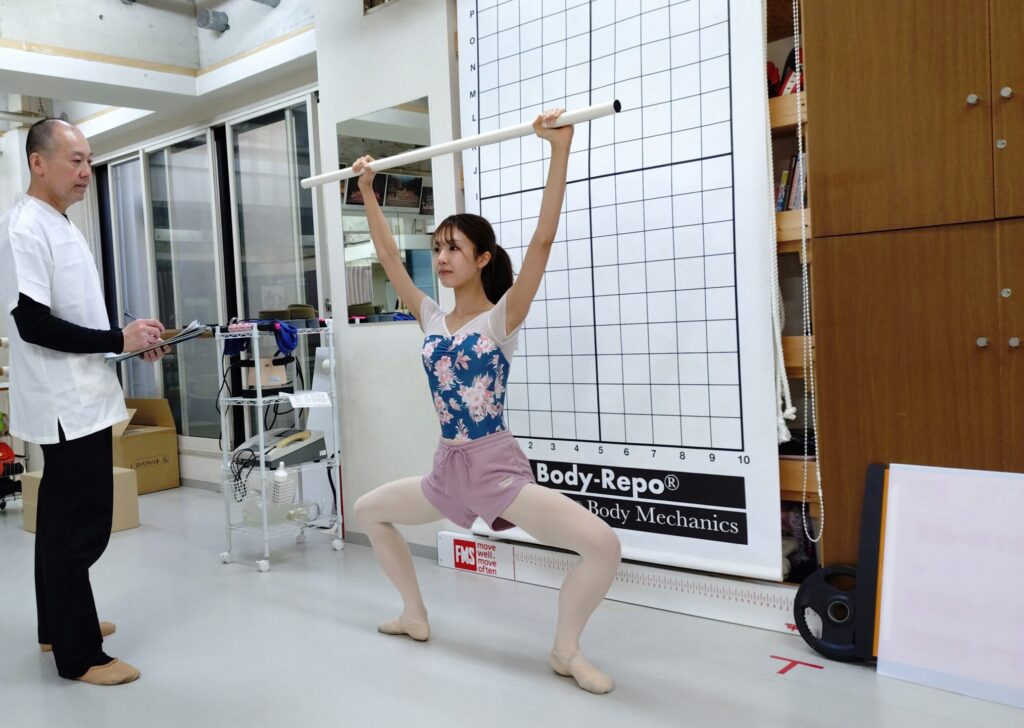
Execution Order:
6th → 1st → 2nd → 4th → 5th position (3 repetitions each)
Purpose
- Ability to maintain correct alignment under changing leg conditions
- Integration of lower-limb alignment and trunk support
- Adaptability to changing load conditions
Checkpoints (Common to All Positions)
- Foot–knee–hip–pelvis–trunk alignment is maintained
□ ✓ □ △ □ ✕ - No excessive load concentration on a specific area due to stance change
□ ✓ □ △ □ ✕ - Trunk position does not collapse as depth increases
□ ✓ □ △ □ ✕
Observation (keywords):
Overall Organization (Check All That Apply)
□ Pelvic alignment priority
□ Supporting leg / load condition priority
□ Hip joint function priority
□ Spine / thoracic cage function priority
□ Balance and coordination priority
Priority (maximum two):
① ____________________
② ____________________
Evaluator Notes (brief)
Functional Training (Performed on the Same Day)
Instruction Date: ____ / ____ / ____
□ Reposition® (Restore Alignment)
Target: ① ② ③ ④ ⑤ ⑥ (circle applicable numbers)
□ Practical Integration
Développé trials:
Right – 3 directions → Left – 3 directions × ____ sets
□ Release & Reposition®
Content: Applied as needed based on condition
Document Positioning (Internal Use)
- Not a scoring sheet
- For learning, organization, and priority setting
- Used to automate subsequent program selection
You are free to use this material, provided that the source is clearly credited.
BFMT by BODYREPO

成長期ジュニアバレエダンサーを中心に、子供から大人、趣味からプロまで対応するバレエ整体学習型コンディショニング施設です。柔軟性、つま先・甲出し、痛みや伸び悩みに対し、AI動作分析を活用した身体づくりをサポートしています。柔軟性が必要な新体操やチア、各種競技にも対応しています。
 前の記事へ
前の記事へ